

Laser Treatments · Cosmetic Dermatology
Laser Hair Removal and Skin Resurfacing: Two Lasers, Two Different Jobs
Laser hair removal reduces unwanted hair long-term. Laser skin resurfacing rebuilds collagen to improve wrinkles, texture, and pigmentation. Here's how each works and what real results look like.
Reviewed by Dr. Sam Abaza. Diplomate, American Board of Physician Specialties
5 min read · 6 scientific references
75%
average hair reduction at 6 months using a multi-wavelength laser regimen. Clinical study, PMC.
54%
improvement in periorbital wrinkles one month after fractional laser resurfacing. Manstein et al., clinical study.
3-6
typical number of sessions for a full laser skin resurfacing treatment series.
26 min
average laser hair removal session length, versus 152 minutes for electrolysis. Comparative clinical study, PMC.
How do laser hair removal and skin resurfacing actually work?
Laser hair removal works by targeting melanin, the pigment in hair, with a concentrated beam of light. The laser's energy is absorbed by the hair follicle and converted to heat, damaging the follicle's ability to grow new hair. Because hair grows in cycles, and the laser only affects follicles that are actively growing at the time of treatment, multiple sessions spaced several weeks apart are needed to catch each follicle during its active phase. The FDA classifies these devices as cleared for "permanent hair reduction," not permanent removal, since some regrowth over time is expected even after a full treatment series.
Laser skin resurfacing works on a different principle entirely. Rather than targeting a specific pigment, it uses controlled laser energy to create микро-injuries in the skin, prompting the body's natural wound-healing response. That healing process stimulates new, better-organized collagen production in the dermis, the layer of skin responsible for firmness and smoothness. This is why resurfacing improves not just one concern but several at once, wrinkles, texture, and pigmentation, since it's rebuilding the skin's underlying structure rather than treating a single symptom.
What to expect during a session:
-
Consultation and skin assessment. Dr. Abaza evaluates your goals, skin type, and hair or pigment characteristics to determine the right laser wavelength and settings.
-
Protective eyewear and skin preparation. The treatment area is cleaned, and protective eyewear is worn throughout.
-
Laser treatment. Pulses are delivered across the treatment area; hair removal sessions run about 15 to 45 minutes depending on area size, resurfacing sessions vary based on depth and coverage.
-
Cooling and aftercare. A cooling gel or device is often used immediately after treatment to reduce discomfort, followed by specific aftercare instructions.
-
Session spacing. Hair removal sessions are typically spaced 4 to 6 weeks apart; resurfacing sessions are typically spaced 4 or more weeks apart to allow full healing between treatments.
-
Progress reassessment. Results are evaluated between sessions, and settings are adjusted as needed based on your skin's response.
Which laser treatment is right for you?
Laser hair removal and laser skin resurfacing are sometimes confused because they're both performed with laser devices, but they solve entirely different problems. One reduces unwanted hair long-term. The other rebuilds collagen to improve how your skin looks and feels. Many patients are candidates for both, often on different areas or timelines.
Mohs is most commonly used for basal cell carcinoma and squamous cell carcinoma, the two most common forms of skin cancer, but it's also used for select rarer tumors including certain melanomas, dermatofibrosarcoma protuberans, and Merkel cell carcinoma, among others.²
Laser Hair Removal vs. Laser Skin Resurfacing
Factor | Laser Hair Removal | Laser Skin Resurfacing |
|---|---|---|
What it treats | Unwanted hair growth | Wrinkles, texture, and pigmentation |
How it works | Targets melanin in the hair follicle to damage regrowth | Creates controlled micro-injury to stimulate new collagen |
Typical session time | 15 to 45 minutes depending on area | Varies by depth and area treated |
Sessions needed | Multiple sessions, spaced 4 to 6 weeks apart | 3 to 6 sessions, spaced 4 or more weeks apart |
Downtime | Minimal, mild redness possible | Several days of redness, peeling, or swelling depending on laser depth |
Results | Up to 75% hair reduction at 6 months with a full regimen | Up to 54% wrinkle improvement and measurable pigmentation improvement |
Best for | Reducing hair regrowth long-term on any treatable area | Improving overall skin quality: wrinkles, tone, and texture |
Am I a candidate for laser hair removal or skin resurfacing?
Laser hair removal works best on hair that contrasts with the surrounding skin, since the laser targets melanin (pigment) in the hair itself. Modern lasers can safely treat a wide range of skin tones when the right wavelength and settings are selected, which is why an in-person skin and hair assessment matters more than a generic online recommendation.
Laser skin resurfacing is generally appropriate for adults concerned about fine lines, uneven texture, or sun damage-related pigmentation. Deeper, more aggressive lasers require more downtime and are typically reserved for more significant photoaging, while lighter fractional treatments suit patients wanting gradual improvement with minimal recovery. Certain skin tones require extra caution with more aggressive lasers due to a higher risk of post-inflammatory hyperpigmentation, which is why treatment planning is personalized at consultation.
Dr. Abaza's Recommendation
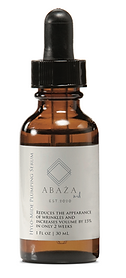
Both laser hair removal and skin resurfacing rely on healthy, well-hydrated skin to heal properly and hold results. A gentle, hydrating serum supports the skin barrier before and after laser treatments.
What should I expect after a laser treatment?
Recovery depends on which laser treatment you receive. Laser hair removal typically causes mild redness or slight swelling around the follicles for a few hours, similar to a mild sunburn, with most patients returning to normal activities immediately. Laser skin resurfacing recovery varies by depth: lighter fractional treatments may cause a few days of redness and mild peeling, while deeper resurfacing can involve up to a week or more of visible healing, including redness, swelling, and skin shedding as new skin forms underneath.
Is laser hair removal permanent? Laser hair removal is FDA-cleared for permanent hair reduction, not permanent removal. Most patients see significant, long-lasting reduction in hair growth after a full treatment series, though some fine regrowth is common over time and occasional maintenance sessions may be needed.
Does laser skin resurfacing hurt? Discomfort varies by laser depth and intensity. Lighter fractional treatments are generally well-tolerated, often described as a warm, prickling sensation, while deeper resurfacing may require topical numbing beforehand for comfort.
How many laser hair removal sessions will I need? Most patients need multiple sessions spaced 4 to 6 weeks apart, since the laser only affects hair follicles that are actively growing at the time of treatment. A full course typically spans several months to catch hair across its full growth cycle.
Can laser treatments be done on darker skin tones? Yes, with the right laser wavelength and settings. Certain lasers and more aggressive treatments carry a higher risk of pigmentation changes in darker skin tones, which is why treatment selection is personalized based on your specific skin type during consultation.
How long do laser skin resurfacing results last? Results from a full resurfacing series can last a year or more, though ongoing sun protection and skincare significantly affect how long improvements are maintained, since new sun damage and aging continue over time.
Sources Cited in This Page
1. Medical laser hair removal: a new rotational approach. Clinical study, National Center for Biotechnology Information (NCBI/PMC).
2. Comparison of Permanent Hair Removal Procedures. National Center for Biotechnology Information (NCBI/PMC).
3. Manstein D, et al. Non-ablative fractional resurfacing clinical study, as cited in peer-reviewed dermatology literature.
4. Jih M, et al. Fractional laser pigmentation improvement study, as cited in peer-reviewed dermatology literature.
5. An Effective and Safe Laser Treatment Strategy of Fractional Carbon Dioxide Laser for Periorbital Wrinkles: A Randomized Split-Face Trial. Dermatology and Therapy journal.
6. U.S. Food and Drug Administration, laser hair removal device clearance classification and terminology.
This page is for general educational purposes and does not replace an in-person medical evaluation. Individual cure rates and treatment recommendations depend on tumor type, size, location, and patient history. Schedule a consultation with Dr. Abaza to discuss your specific case.
Bottom Line
Two Lasers, Two Different Goals, Often Used Together
Laser hair removal and laser skin resurfacing solve entirely different problems, one reduces unwanted hair, the other rebuilds collagen to improve how skin looks and feels. Many patients benefit from both, on different areas and different timelines. A consultation with Dr. Abaza is the fastest way to determine the right laser, settings, and schedule for your specific skin and goals.